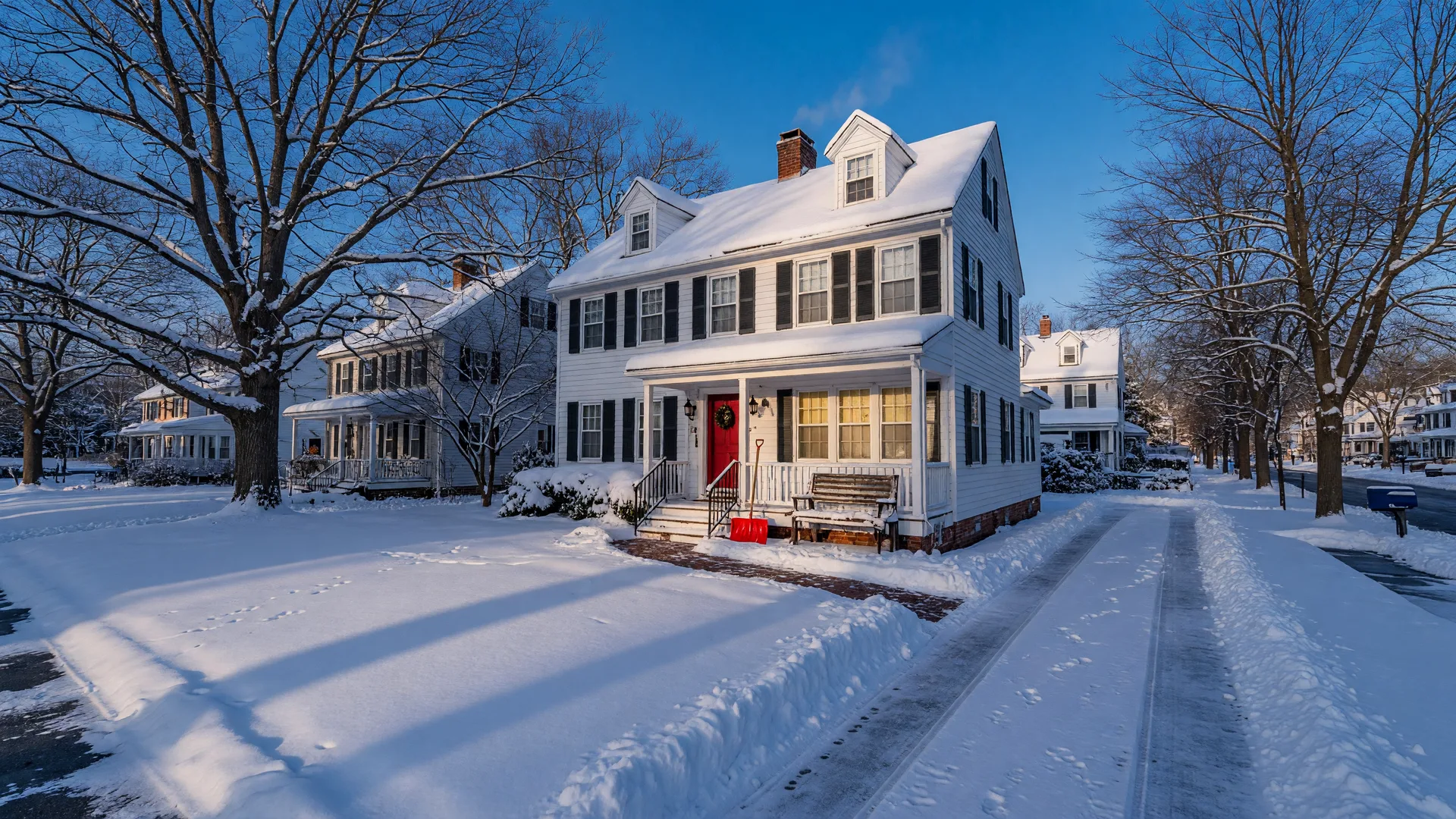
Every few winters, a major storm rolls through Moorestown and tests the town's homeowners. The January 2016 blizzard dropped 20.3 inches of snow on the Town of Quality, and the February 2026 blizzard buried Burlington County in roughly two feet of snow in places. When the lights go out on a cold night, the difference between an inconvenience and a crisis is decided long before the first flake falls.
Winter storm and power outage preparation is one of the most valuable things a Moorestown homeowner can do each fall. A little advance planning protects your family's comfort and safety, and it protects your home from the expensive damage that ice, snow, and freezing temperatures can cause. This guide walks through the specific steps that matter here: what to stock, how to sign up for Moorestown alerts, the safety rules for portable generators, how to keep pipes and basements dry when the power fails, and what your insurance actually covers.
How Much Snow Does Moorestown Actually Get in Winter?
Understanding the local winter risk is the first step in preparing for it. Moorestown averages 15 to 20 inches of snow per year, with most snowfall concentrated in January and February. Storms that drop 6 inches or more happen two to three times a year in a typical season. Ice storms and the freezing rain that follows coastal nor'easters are just as disruptive as heavy snow, because ice brings down tree limbs and power lines.
Moorestown has seen serious storms on record. The National Weather Service measured 20.3 inches of snow in Moorestown during the January 2016 blizzard, and the February 2026 blizzard brought roughly 20 inches to many Burlington County towns, including about 20.8 inches in nearby Mount Laurel and 20.3 inches in Lumberton. Because Moorestown's power runs largely through above-ground lines in mature-tree neighborhoods, a heavy, wet storm can mean multi-day outages in the worst cases.
The good news is that the township is well prepared. Main roads are plowed first, then secondary roads and residential streets, and Moorestown maintains an emergency alert system to keep residents informed. Being personally prepared means you ride out the storm comfortably instead of scrambling after it arrives.
What Should I Stock Before a Winter Storm Hits?
The best time to gather supplies is now, before the storm watch is posted. Stores in the area sell out of ice melt, batteries, and bottled water within hours of a winter weather advisory, so stock your kit before the calendar turns.
Build a home emergency kit. Plan for at least three days without power: bottled water and non-perishable food, a manual can opener, flashlights and extra batteries, a battery-powered radio or NOAA weather radio, phone power banks, first aid supplies, and any prescription medications your family needs. Add warm blankets, sleeping bags, and layers of clothing, because a house without heat gets cold fast in a South Jersey winter.
Stock the essentials for staying warm and moving snow. Keep a snow shovel, ice melt, and a snow blower with fresh fuel and a working pull cord. Test the snow blower before the first storm. If you rely on a plow service, book it early, because the good operators fill up the moment a storm is forecast.
Prepare a car emergency kit too. If you must drive in a storm, keep a kit in the trunk with a shovel, ice scraper, blanket, jumper cables, flashlight, and phone charger. During the worst conditions, stay home if you can; Moorestown's streets off Main and Chester get snow-covered quickly even when plows are running.
How Do I Sign Up for Moorestown Alerts and Track Power Outages?
Moorestown has a formal alert system, and signing up now means you hear about road closures, boil-water advisories, and parking alerts before they affect you. The township's Alert Center and Notify Me service on the official website at moorestown.nj.us lets residents sign up for email, text, and phone notifications through the Office of Emergency Management. The state's ReadyNJ alerts add another layer of advance notice for major winter storms.
Know how to report a PSE&G outage. Most Moorestown homes get electricity and natural gas from PSE&G. When the power goes out, report it early so crews know it affects you. You can call 1-800-436-PSEG (1-800-436-7734), text "OUT" to 4PSEG (47734), or report online at nj.pseg.com or through the PSE&G mobile app. Text "STAT" to the same number for restoration updates, or watch the PSE&G outage map.
Treat downed wires as live. After a storm, never approach a downed or sagging power line, and stay at least 30 feet away. Assume every wire is energized, report it to PSE&G and 911, and keep children and pets clear. If you smell gas, leave the home immediately and call 911 from outside.
How Do I Use a Portable Generator Safely?
A portable generator is one of the most useful tools in a winter outage, and one of the most dangerous when used wrong. Every year in New Jersey, generator carbon monoxide poisoning sends people to the hospital and, in the worst cases, takes lives. The rules are simple but non-negotiable.
Never run a generator inside. Not in the home, not in the basement, not in the garage, and not in a crawl space or any enclosed or partially enclosed structure. A generator can emit roughly 100 times more carbon monoxide than a modern car, and the gas is invisible and odorless. Run the generator outdoors only, in a dry, well-ventilated spot, with the exhaust pointed away from the house.
Keep it well away from the home. Place the generator at least 20 feet from all doors, windows, and vents so exhaust fumes cannot drift back inside. Use a heavy-duty, three-pronged extension cord rated for the load, and run the generator on a ground fault circuit interrupter (GFCI) outlet where possible.
Never plug a generator into a wall outlet. Plugging it into a home outlet, or wiring it directly into your electrical panel without a proper transfer switch, creates backfeed. Backfeed sends power up the line and can electrocute utility workers restoring service. Plug appliances directly into the generator instead, or have a licensed electrician install a permanent transfer switch for a standby unit. If you have a generator and are unsure it was installed correctly, have it inspected before you need it.
Your carbon monoxide detectors are your backup. New Jersey law requires working CO alarms in every dwelling with a fuel-burning appliance or an attached garage. Test them at the start of every winter and replace batteries twice a year. If a CO alarm sounds, get everyone outside and call 911.
How Do I Protect Pipes and the Basement When the Power Goes Out?
Power outages and freezing temperatures are a dangerous combination for a home's plumbing. When the heat stops running, the interior of the house can drop below freezing within hours, and any pipe near an exterior wall is at risk. The frozen pipes guide covers the full playbook, but the core steps are worth repeating here.
Keep cold air out and heat in. Close garage doors, open kitchen and bathroom cabinet doors so warm air reaches pipes under sinks, and keep the thermostat at a consistent temperature, even if you plan to leave. If the power is out for a long stretch, let faucets drip slightly; moving water is far less likely to freeze. Know where your main water shutoff valve is, usually in the basement or crawl space, so you can stop the flow fast if a pipe does burst.
Protect your sump pump. If your Moorestown home has a basement, the sump pump is what keeps it dry through winter rain and snowmelt. When the power goes out, a standard pump goes silent, and a wet winter can leave you with a flooded basement in the middle of a storm. A battery backup sump pump, or a generator powerful enough to run the pump, is one of the smartest investments a basement owner can make. The basement waterproofing guide walks through sump pumps, drain tile, and grading in detail.
Clear drains and gutters before the storm. A clogged storm drain or gutter turns light rain into pooling water against your foundation. With the fall leaf drop nearly done, this is the perfect time to confirm downspouts carry water well away from the house.
What Heating and Home Checks Should I Do Before a Storm Arrives?
Your heating system is your first line of defense in a winter storm, and the work to keep it reliable happens in the weeks before the snow flies. The fall home maintenance checklist covers the full seasonal routine, including the checks that matter most for storm season.
Get your furnace or heat pump serviced. Have a licensed technician inspect and tune your system each fall so a failure does not surface on the coldest night of the year, when every HVAC company in Burlington County is booked. Replace the filter before the season and test the heat on a mild day so you know it works before you depend on it.
Seal drafts and know your backup heat. Weatherstripping around doors, window seals, and the attic hatch all keep warm air where you want it, which matters more during an outage when every degree counts. If you have a fireplace or wood stove, have the chimney inspected and cleaned, and make sure you have dry firewood stacked and accessible. Space heaters are a fine backup, but keep them at least three feet from anything flammable and never leave them running unattended.
Check what your home depends on. If your stove, water heater, or furnace is electric, an outage takes out more than the lights. Know your equipment, and plan how you will cook and stay warm if the power is out for more than a day. The utilities guide explains how PSE&G and local services work so you know what to expect.
Does Homeowners Insurance Cover Winter Storm Damage in Moorestown?
Understanding your coverage before a storm means no surprises afterward. A standard homeowners policy in New Jersey generally covers wind damage, damage from the weight of snow and ice on your roof, and water damage from a burst pipe, including the cost of tearing out and replacing walls and floors to reach the leak. Your deductible applies, so check the number and make sure it is one you can actually pay.
Flooding is a separate question. Water that comes up from the ground, through foundation walls, or from storm surge is not covered by a standard homeowners policy; it requires flood insurance through the National Flood Insurance Program or a private carrier. Even homes outside a mapped flood zone can see water issues in a heavy storm, and Moorestown property owners in higher-risk areas should take flood coverage seriously. The flood insurance guide explains what is available and what it costs.
Document everything. If a storm damages your home, take photos before you clean up, keep receipts for emergency repairs and hotel stays, and contact your insurer promptly. Prompt reporting and documentation make the claims process smoother. For a fuller look at what your policy should cover in the Town of Quality, the homeowners insurance guide breaks it down by coverage type.
Frequently Asked Questions
How much snow does Moorestown usually get each winter?
Moorestown averages 15 to 20 inches of snow per year, with most snowfall in January and February. Storms dropping 6 inches or more happen about two to three times per season, and ice storms can be just as disruptive because they take down tree limbs and power lines.
What should I keep in a winter emergency kit?
Plan for at least three days without power: bottled water, non-perishable food, a manual can opener, flashlights, batteries, a battery-powered radio, phone power banks, first aid supplies, medications, warm blankets, and layers of clothing. Add a snow shovel, ice melt, and a working snow blower for the yard.
How do I report a power outage to PSE&G in Moorestown?
Call 1-800-436-PSEG (1-800-436-7734), text "OUT" to 4PSEG (47734), or report online at nj.pseg.com or through the PSE&G mobile app. Text "STAT" to 4PSEG for restoration updates, and check the PSE&G outage map for the latest status.
How far from the house should a portable generator run?
Run a portable generator outdoors only, at least 20 feet from all doors, windows, and vents, with the exhaust pointed away from the home. Never run it in the house, basement, garage, or crawl space, and never plug it into a wall outlet, which creates dangerous backfeed.
Why does my sump pump need a battery backup?
A standard sump pump stops working the moment the power goes out, and winter rain and snowmelt can flood a basement in hours. A battery backup pump keeps working through an outage, and a generator rated for the pump's draw is another option. It is one of the best investments a basement owner can make.
What winter storm damage does homeowners insurance cover?
A standard policy generally covers wind damage, damage from the weight of snow and ice, and water damage from a burst pipe. Flooding that comes up from the ground is not covered and requires separate flood insurance. Document damage with photos and report claims promptly.
Where can I sign up for Moorestown emergency alerts?
Use the Alert Center and Notify Me service on the official township website at moorestown.nj.us to sign up for email, text, and phone notifications through the Office of Emergency Management. New Jersey's ReadyNJ service adds statewide alerts for major storms.