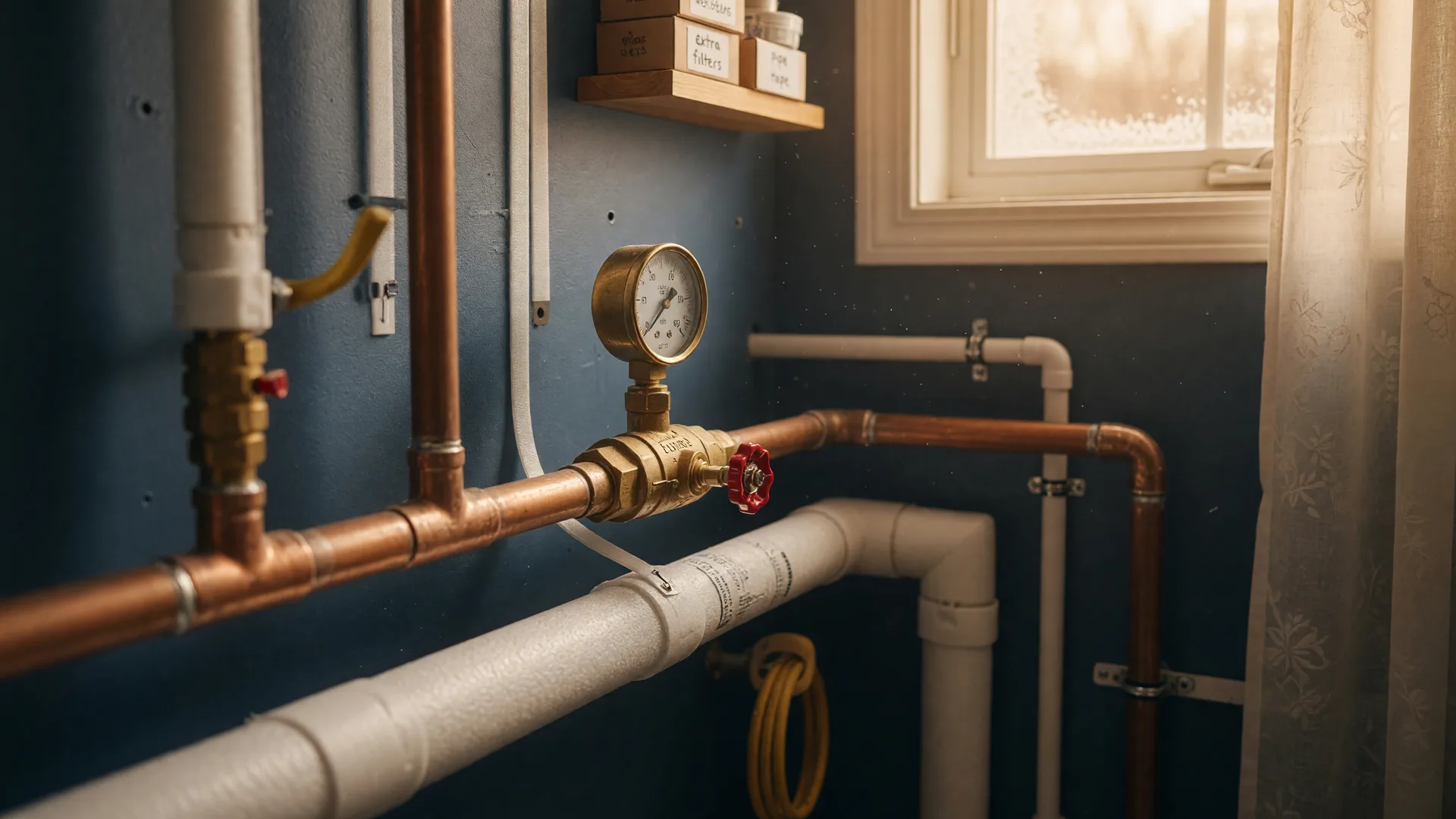
Frozen pipes are one of the most common, and most expensive, winter problems a Moorestown homeowner can face. A single burst pipe can release hundreds of gallons of water into a basement, finished room, or wall cavity in a matter of hours. The good news is that frozen pipes are almost entirely preventable with a few hours of preparation each fall.
In Moorestown, the coldest months are December, January, and February, with January average lows around 23 to 25 degrees. Water freezes at 32 degrees, and unprotected pipes in unheated spaces can freeze when outdoor temperatures hold near 20 degrees for long stretches, which happens several times in a typical South Jersey winter. This guide walks through which pipes freeze first in the Town of Quality, what thermostat setting protects your home, how to prepare before a deep freeze, and exactly what to do if a pipe freezes or bursts anyway.
The work is simple, inexpensive, and mostly done once. Pair this guide with the fall home maintenance checklist and your plumbing will be ready long before the first hard frost.
Why Do Pipes Freeze in Moorestown Homes?
Water expands by roughly 9 percent when it freezes, and that expansion is what breaks pipes. The ice itself rarely damages the pipe; the pressure it creates between the ice plug and a closed faucet or valve is what splits the metal or plastic. That is why a dripping faucet helps: an open faucet gives the expanding water somewhere to go.
Pipes do not freeze the moment the temperature hits 32 degrees. Inside a heated home, the building envelope and insulation keep pipes well above freezing even on cold nights. Problems start when a pipe sits in a space that is not heated or not insulated: an unheated basement, a crawl space, an attic, a garage, or an exterior wall cavity. When the air around those pipes drops near freezing, the water inside them follows.
Moorestown winters provide plenty of opportunities. The township's climate data shows average January lows near 23 to 25 degrees, with stretches of nights in the teens not uncommon. Any plumbing in a cold space is at risk during those stretches, especially in older homes where pipes run through uninsulated walls. If you are curious about how local weather patterns affect day-to-day life, the Moorestown weather guide covers the full seasonal picture.
Which Pipes Are Most at Risk in a Moorestown Home?
Not all pipes freeze equally. Knowing where the vulnerable ones are in your house lets you focus your prep where it matters.
Pipes on exterior walls. Kitchen and bathroom sinks that sit against an outside wall are the classic freeze spot, because the pipes run through a wall cavity that is colder than the room. In Moorestown's historic downtown district, where many homes along Main Street, Chester Avenue, and Maple Avenue were built with original plumbing runs, these exterior-wall lines deserve special attention.
Unheated basements, crawl spaces, and attics. Exposed pipes in spaces that are not heated are the most vulnerable of all. Many mid-century Moorestown homes, especially in neighborhoods around Hartford Road and toward Lenola, have crawl spaces and attached garages that were never designed to be heated. A single uninsulated pipe through a crawl space can freeze while the rest of the house stays warm.
Garages and laundry areas. Pipes running through an attached garage, including water heater lines and laundry connections, freeze quickly because garage doors are opened and closed to the cold all winter. If your water heater sits in the garage, that is a priority spot.
Long, exposed runs near drafts. Any pipe that passes near a drafty gap, a foundation vent, or a spot where cold air leaks in is at higher risk. Sealing those gaps helps the pipes and your heating bill at the same time. For a complete look at the town's varied housing stock and where each home type is found, the Living in Moorestown guide is a good starting point.
What Temperature Should I Keep My Thermostat At in Winter?
Never let your home drop below 55 degrees, even when you are away. That is the widely accepted rule of thumb among plumbers and insurers, and it gives a comfortable margin above freezing for interior pipes. If you travel for the holidays, set the thermostat to at least 55 degrees and leave it there. The small heating cost is nothing compared with a flooded basement.
When you are home, 65 to 68 degrees is plenty for both comfort and protection. During a deep freeze, resist the urge to turn the heat down at night to save money. A programmable or smart thermostat makes this easy: set a floor of 55 degrees that never drops below, and schedule warmer temperatures only when you are actually home.
Make sure the heat actually reaches the cold spots. Keep interior doors open so warm air circulates into rooms with plumbing on exterior walls, and check that vents and registers in those rooms are not blocked by furniture. If a room with pipes is always cold, a small space heater with a thermostat, used safely and never left unattended, can protect a specific zone. PSE&G is the electric and natural gas provider for Moorestown, and the Moorestown utilities guide has details on providers, billing, and energy programs that can help offset winter heating costs.
How Do I Prepare My Plumbing Before the First Hard Freeze?
A few hours of fall prep prevents nearly every frozen pipe. Do this before the first hard freeze, ideally by mid-November in Moorestown.
Winterize everything outdoors. Disconnect and drain garden hoses, shut off and drain exterior faucets from the inside valve, and blow out your irrigation system so no water is left to freeze and burst. If you have a pool, winterize its lines too. This is the same outdoor prep covered in the fall maintenance checklist, and it is the single most reliable way to avoid a spring surprise.
Find and label your main shut-off valve. Every adult in the house should know where the main water valve is and how to turn it off. In Moorestown homes it is commonly in the basement, crawl space, garage, or at the water meter. Label it clearly and test it once a year so it turns freely when you need it in a hurry. If you are unsure where yours is, the Moorestown Water Department can help you locate the meter and shut-off on your property.
Insulate exposed pipes. Foam pipe sleeves are inexpensive and take minutes to install. Cover exposed pipes in unheated basements, crawl spaces, attics, and garages, and pay extra attention to elbows and joints, where freezing starts first. For pipes on exterior walls that you cannot reach, consider having a plumber add insulation or reroute the line.
Seal air leaks around pipes. Use caulk or spray foam to seal gaps where pipes enter the house from outside, and around foundation vents and sill plates. Cold air following a pipe into the house is a common freeze cause and an energy leak at the same time.
What Should I Do During a Deep Freeze?
When the forecast calls for a hard freeze, a short list of habits protects your plumbing through the night.
Let faucets drip. Open a cold-water faucet to a slow, steady drip, ideally the faucet farthest from where water enters the house, so water keeps moving through the whole system. Moving water is far less likely to freeze. Do this for any sink on an exterior wall.
Open cabinet doors. Under kitchen and bathroom sinks on exterior walls, open the cabinet doors so warm room air reaches the pipes. Move cleaning supplies out of reach of kids and pets first.
Keep garage doors closed. If water lines run through the garage, keep the garage door shut as much as possible. If you have an attached garage with a water heater inside, this matters even more.
Keep the heat on and the house sealed. Hold your thermostat at its normal setting through the freeze, and keep attic and crawl space access doors closed so warm air does not escape into cold spaces. Do not fully block foundation vents in a way that traps moisture, but close them to drafts where you can.
What Should I Do If a Pipe Freezes or Bursts?
Even with the best preparation, pipes can freeze. Acting fast limits the damage.
Know the signs of a frozen pipe. Little or no water from a faucet, frost on exposed pipes, a bulging or cracked section of pipe, or an unusual smell from a drain can all indicate a freeze. If you suspect one, check the most vulnerable spots first: exterior walls, the basement, and the garage.
Thaw a frozen pipe safely. Keep the faucet open, then apply gentle heat starting closest to the faucet and working toward the ice. A hair dryer on low, a portable space heater aimed at the pipe, or towels soaked in hot water all work. Never use an open flame, a blowtorch, or a propane heater on a pipe: the fire risk is real, and a sudden temperature change can crack the pipe. Continue heating until full water pressure returns.
If a pipe bursts, shut off the main valve immediately. Then turn off the water heater (to protect it from running dry and overheating), open faucets to drain the lines, and call a plumber. Move valuables out of the water's path, and take photos of the damage before cleanup for your insurance claim.
Know who to call. For a plumbing emergency, a licensed local plumber is your first call. For water or sewer issues involving the street or the township system, contact the Moorestown Water Department. In a true emergency involving your home, the Moorestown emergency services guide lists the police, fire, and utility contacts you need.
Does Homeowners Insurance Cover Frozen Pipe Damage?
Most standard homeowners policies cover sudden, accidental water damage from a burst pipe. That includes damage to walls, floors, ceilings, and personal belongings. The key word is sudden: insurers generally expect homeowners to take reasonable care, such as keeping the heat on and maintaining the property. If a pipe freezes because you left the house unheated for weeks in January, a claim can be denied as a maintenance issue.
Document everything and call your insurer promptly. Photograph the damage, keep receipts for emergency repairs and temporary housing, and report the claim as soon as the water is stopped. Your carrier will walk you through what is covered and what your deductible applies to.
Flooding from storms is a separate matter. Water that enters your home from outside, whether from a heavy rain or a rising water table, is typically covered only by flood insurance, not a standard homeowners policy. The Moorestown flood insurance guide explains the distinction, and the homeowners insurance guide covers what a standard policy should include.
Which Local Plumbers Serve Moorestown?
If you need a professional, Moorestown and the surrounding area have several established plumbing companies. Booking a pre-winter inspection in October or early November is far easier than getting an emergency appointment during the first cold snap, when every plumber in Burlington County is swamped.
Moorestown-based options include Eddie B Plumbing, a local company serving the area; Salmon Plumbing & Heating on East 2nd Street; Joe Hitchens Plumbing; and A Anthony's Plumbing & Rooter Services. Nearby, Len The Plumber in Cherry Hill and Horizon Services in Mount Laurel also serve Moorestown homes. Always confirm a plumber is licensed and insured before hiring, and ask about emergency availability and pricing up front.
For a broader list of trusted local tradespeople, including contractors for insulation, heating, and repairs, the Moorestown contractors guide is a handy reference, and the year-round home maintenance guide keeps the whole seasonal picture in one place.
Frequently Asked Questions
At what temperature do pipes freeze in a house?
Water freezes at 32 degrees, but pipes inside a heated home usually do not freeze until outdoor temperatures hold near 20 degrees for a sustained stretch, because the building and insulation retain warmth. Pipes in unheated spaces like basements, crawl spaces, garages, and exterior walls can freeze whenever the air around them drops near 32 degrees.
Should I leave my heat on when I go away in winter?
Yes. Keep the thermostat at 55 degrees or higher, even when you are away, and never turn the heat off completely. The small cost of maintaining 55 degrees is far less than the cost of a burst pipe and water damage. A smart thermostat makes it easy to set a floor temperature that never drops below 55.
Should I let my faucets drip when it is freezing?
Yes, during a hard freeze let a cold-water faucet run at a slow, steady drip, ideally the faucet farthest from where water enters the house. Moving water is far less likely to freeze, and an open faucet gives expanding water somewhere to go. Open cabinet doors under sinks on exterior walls so warm room air reaches the pipes.
How do I thaw a frozen pipe safely?
Keep the faucet open, then apply gentle heat starting closest to the faucet and working toward the ice. A hair dryer on low, a portable space heater aimed at the pipe, or towels soaked in hot water all work. Never use an open flame or blowtorch, which is a fire hazard and can crack the pipe from sudden heat.
What do I do if a pipe bursts?
Shut off the main water valve immediately, then turn off the water heater so it does not run dry and overheat. Open faucets to drain the lines, call a licensed plumber, and photograph the damage for your insurance claim before cleanup. Every adult in the house should know where the main shut-off valve is.
Does homeowners insurance cover frozen pipe damage?
Most standard policies cover sudden, accidental water damage from a burst pipe, including damage to walls, floors, and belongings. Claims can be denied if the freeze resulted from neglect, such as leaving the house unheated for an extended period. Document the damage, keep receipts, and report the claim promptly. Storm-driven flooding from outside is covered only by flood insurance.
When should I shut off my outdoor water in Moorestown?
Before the first hard freeze, ideally by mid-November. Disconnect and drain garden hoses, shut off and drain exterior faucets from the inside valve, and blow out your irrigation system so trapped water cannot freeze and burst the lines. This is one of the most reliable ways to avoid a costly spring repair.
Who do I call for a plumbing emergency in Moorestown?
For a burst pipe or major leak, call a licensed local plumber first, then your insurance company. Local companies serving Moorestown include Eddie B Plumbing, Salmon Plumbing and Heating, Joe Hitchens Plumbing, and A Anthony's Plumbing and Rooter Services, with Len The Plumber and Horizon Services nearby. For issues involving the street or township system, contact the Moorestown Water Department.