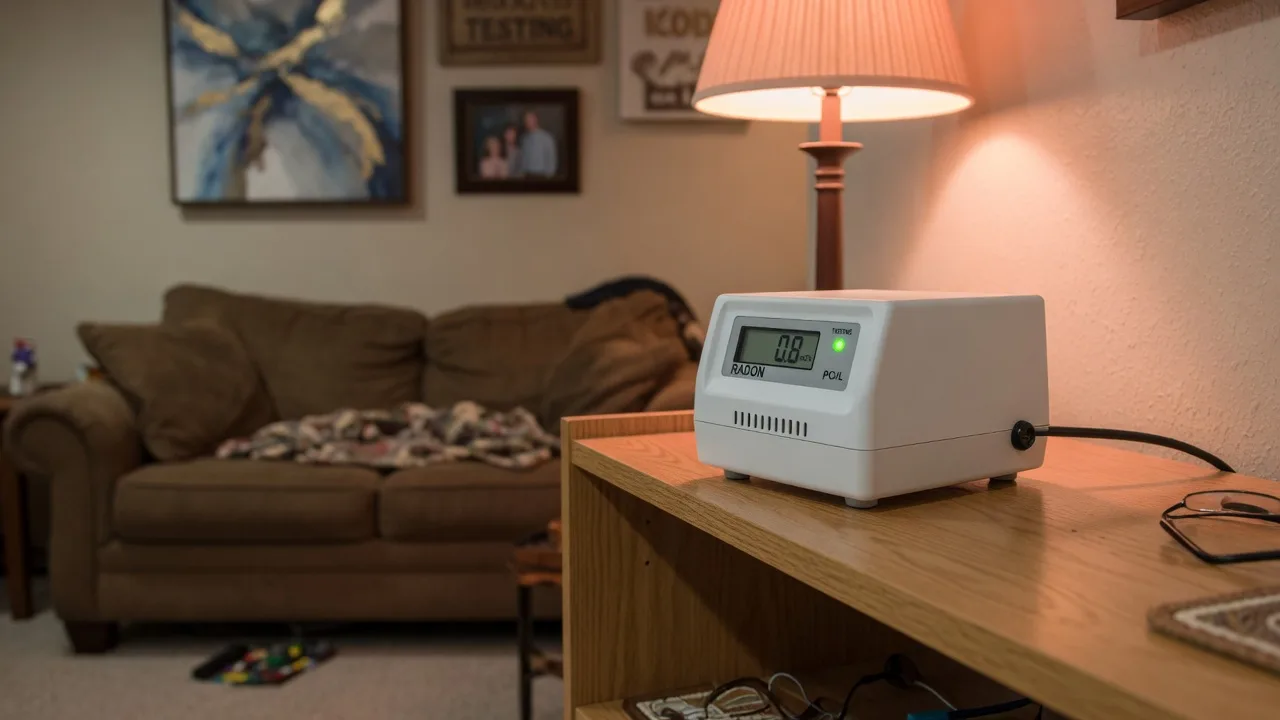
Radon is an invisible, odorless radioactive gas that comes from the natural decay of uranium in soil and rock, and it is the second leading cause of lung cancer in the United States after smoking. Burlington County is rated by the EPA as a Zone 2 area, meaning moderate radon potential, and the New Jersey Department of Environmental Protection recommends that every home in the state be tested regardless of which tier your town falls in. For Moorestown homeowners and buyers, that makes radon one of those quiet, easy-to-ignore issues that deserves a real answer.
This guide covers what radon is, how likely it is to show up in a Moorestown home, how to test correctly, what the numbers mean, what mitigation costs in New Jersey, and the state rules that apply when you buy or sell. The good news: radon is one of the most fixable home health issues there is, and a test costs less than a tank of gas.
What Is Radon, and Why Should Moorestown Homeowners Care?
Radon forms when uranium in the ground breaks down, releasing a gas that seeps up through the soil and into the air. Outdoors it dilutes to harmless levels, but inside a home it can build up, especially in the lowest lived-in level: a basement, a crawl space, or a slab-on-grade family room. The gas enters through cracks in the foundation, gaps around pipes, sump pits, and the joint where the floor meets the wall.
The health concern is real. The U.S. Surgeon General and the EPA both identify radon as the second leading cause of lung cancer, and the EPA estimates it is responsible for about 21,000 lung cancer deaths in the country each year. The risk is dose-dependent: the higher the level and the longer the exposure, the greater the risk. Smokers face a dramatically higher combined risk, which is why the EPA is blunt that testing is the only way to know your home's level.
Moorestown's housing stock makes this a relevant question here. The historic homes near Main Street, Chester Avenue, and Maple Avenue often have century-old stone or block foundations, dirt-floor crawl spaces, and unsealed openings where soil gas can enter. The post-war and mid-century homes across the township frequently combine block foundations with slab-on-grade additions. Even the newer developments near Lenola sit on modern slabs that, like any foundation, can draw soil gas if the ground beneath them is releasing it. Radon does not care how nice the house is, and it has been found at elevated levels in every tier of the NJDEP's radon map.
Is Burlington County a High-Radon Area?
The EPA's radon zone map places Burlington County in Zone 2, which means a predicted average indoor screening level between 2 and 4 picocuries per liter, a moderate potential rather than the highest-risk Zone 1. The NJDEP keeps its own three-tier map, and Burlington County sits in Tier 2 there as well, meaning moderate radon potential.
Moderate does not mean skip the test. The NJDEP's official guidance is that all homes in New Jersey should be tested for radon, no matter the tier, because elevated levels have been found in every tier of the map. Radon levels vary house to house, and even lot to lot, based on soil conditions, foundation type, and how the house draws air. Two identical-looking homes on the same Moorestown street can test completely differently. The zone map tells you the odds for the county, not the answer for your address, and the only way to get the answer is to test.
When levels do show up here. In my experience walking through Moorestown homes, the houses most likely to see elevated readings are older ones with unfinished basements or crawl spaces, homes with unsealed sump pits, and properties where the lowest level is lived in and heated. If you have a finished basement where the family spends evenings, that is exactly the space the NJDEP wants you to test. The basement waterproofing guide covers the sump pits and drainage systems that also happen to be the most common radon entry points, so the two issues often get addressed together.
How Do You Test for Radon in a Moorestown Home?
Testing is simple, inexpensive, and the NJDEP recommends doing it in the lowest lived-in level of the home, which for most Moorestown houses means the basement or the first floor if you have a crawl space. There are two ways to test: a short-term do-it-yourself kit or a professional measurement.
Short-term DIY test kits. These are the charcoal or electret devices you set out for two to seven days and mail to a lab. They typically cost about $15 to $30 including the lab analysis, and they are available at hardware stores, through the NJDEP's radon program, and from certified labs online. Place the kit in the lowest lived-in area, at least 20 inches off the floor, away from exterior walls, windows, drafts, heat sources, and high-humidity rooms like a bathroom or laundry room. Keep windows and exterior doors closed as much as possible during the test, which is called closed-house conditions, and follow the kit's instructions exactly or the result is meaningless.
Professional testing. A licensed radon measurement company charges roughly $100 to $200 for a test, with typical quotes for a standard home averaging around $200. Professional testing is the right choice for a real estate transaction, because New Jersey requires that a buyer's radon test be performed by an NJDEP-certified professional rather than done by the homeowner. Professional devices are also more precise and can give results in as little as 48 hours, which matters when you are on a contract timeline.
When to test. Test in the heating season if you can, because a closed-up house gives the most conservative reading, but any time of year works if you follow closed-house conditions. The NJDEP recommends retesting every couple of years, after major renovations or foundation work, and any time you buy, sell, or finish a previously unfinished space. If you are buying, radon testing should be part of your inspection strategy, and the Moorestown home inspection guide explains how to line that up with the rest of your due diligence.
What Do Radon Test Results Mean?
Radon is measured in picocuries per liter of air, abbreviated pCi/L. The EPA and the NJDEP use 4 pCi/L as the action level, and the interpretation is straightforward:
Below 2 pCi/L. This is a good result. The EPA says no action is needed, though retesting every couple of years is still smart because conditions change.
Between 2 and 4 pCi/L. The EPA recommends considering a fix, especially if anyone in the household smokes or spends a lot of time in the lowest level. This range is common enough in Burlington County that it should not alarm you, but it should prompt a conversation about mitigation.
At or above 4 pCi/L. This is the action level. The EPA and NJDEP recommend fixing the home, and mitigation in New Jersey must be done by an NJDEP-certified mitigator. Levels above 10 pCi/L are considered serious and should be addressed promptly, and a short-term test that comes back high should be confirmed with a follow-up test before you spend money.
One important note: a single elevated short-term reading is a signal, not a verdict. Weather, how tightly the house was closed, and where the kit sat all influence the number. A follow-up test, ideally a longer-term test of 90 days or more, gives the truest picture of your average exposure, and that is the number that matters for health.
How Much Does Radon Mitigation Cost in New Jersey?
If your test comes back at or above 4 pCi/L, the fix is a radon mitigation system, and the standard approach is called sub-slab depressurization. A certified contractor drills a small hole through the basement floor or slab, installs a pipe that draws soil gas from beneath the house, and runs it to a fan that vents the gas safely above the roofline. The system is quiet, runs continuously, and typically lowers radon levels by 85 to 99 percent.
What it costs. Based on current New Jersey industry figures, a standard residential mitigation system typically runs about $800 to $2,500, with the average job coming in around $1,500. More complex installations, such as homes with crawl spaces, multiple slabs, or difficult vent paths, can run $2,000 to $3,500. The price depends on the size of the footprint, the number of suction points needed, and how the vent pipe has to be routed. Get two or three written quotes from NJDEP-certified mitigators, because pricing varies more than you might expect.
After the system is installed. A post-mitigation test is part of the job, and a reputable contractor will not call the work done until the retest shows the level has dropped well below the action level, ideally under 2 pCi/L. The system's fan should run continuously, and you should retest every couple of years to confirm it is still performing. If you are selling a home with a mitigation system, keep the documentation, because New Jersey law requires you to pass it along to the buyer.
Mitigation is one of those improvements that quietly protects resale value too. When a buyer's inspection turns up an elevated radon reading, a documented, tested mitigation system turns a negotiation headache into a non-issue. It is also a line item that belongs in any honest conversation about seasonal home maintenance, since the NJDEP recommends retesting as part of routine home care.
What Are the New Jersey Radon Rules When You Buy or Sell a Home?
New Jersey does not require a radon test to sell a home, which surprises a lot of people. Testing is mandatory for schools and licensed child care centers, not for residential sales. But the state has real disclosure obligations that both sides should know:
If a home has ever been tested, the results must be shared. Under New Jersey law, a seller who has tested the home for radon must give the buyer a copy of the test results and any documentation of radon mitigation performed. You cannot sit on a high test result from five years ago and hope it does not come up.
The disclosure statement covers known defects. Sellers complete a Seller's Property Condition Disclosure Statement, and known material defects, including radon issues, belong on it. An honest seller who discloses a past high reading and a working mitigation system is in a far better position than one who stays quiet and gets found out at the buyer's test.
Buyers should test, and the test must be professional. A buyer under contract who wants a radon test must hire an NJDEP-certified professional; a do-it-yourself kit does not satisfy a transaction test. In practice, most Moorestown buyers add a radon test alongside the general home inspection, and it is a small, standard line item in the process. The home inspection guide walks through how radon fits into the full inspection picture and how to negotiate if a reading comes back high.
Certification matters. New Jersey requires that radon testing and mitigation be performed only by NJDEP-certified businesses and individuals. Anyone who offers to test or fix your home without certification is operating outside the rules, and the NJDEP maintains a public list of certified professionals you can check before hiring anyone.
Where Can Moorestown Homeowners Get Help?
The NJDEP's Radon Program is the authoritative starting point for Moorestown homeowners. It publishes the state radon map, maintains the list of certified testers and mitigators, and offers guidance on interpreting results, and it has distributed free or low-cost test kits through community programs in the past. A quick search for the NJDEP radon program will get you to the official pages, along with the certified-professional list.
Local resources. Your general contractor or home inspector can usually point you to a certified radon tester they have worked with, and the Moorestown contractors guide has guidance on vetting any trade professional you hire for work on your home. If a high reading has you thinking about your family's health exposure, the Moorestown emergency services guide lists the hospitals and health resources in the area, including Virtua and Cooper, where you can talk through lung health questions with a physician.
The bottom line for Moorestown. Burlington County is a moderate-radon area, not a high-radon area, but moderate is not zero, and the NJDEP's advice is the same for every home in the state: test, and if the number is high, fix it. A $25 test kit and a weekend of closed-house conditions can tell you everything you need to know, and if the result warrants it, a certified mitigation system is a well-understood, affordable fix that protects the health of everyone who lives in your home. For more on keeping your home and family safe year-round, the Moorestown homeowner resources hub collects the rest of the practical guides on this site.
Frequently Asked Questions
Is radon common in Moorestown, NJ?
Burlington County is rated EPA Zone 2 and NJDEP Tier 2, meaning moderate radon potential, and elevated levels have been found in every tier of the state map. Radon varies house to house, which is why the NJDEP recommends testing every home regardless of zone.
What is the radon action level in New Jersey?
The EPA and NJDEP action level is 4 picocuries per liter (pCi/L). Levels at or above 4 pCi/L warrant mitigation, levels between 2 and 4 warrant consideration of a fix, and anything below 2 is a good result. A follow-up test should confirm any elevated short-term reading.
How much does a radon test cost in New Jersey?
A do-it-yourself short-term test kit typically costs about $15 to $30 including lab analysis. Professional testing by an NJDEP-certified company runs roughly $100 to $200, with typical quotes for a standard home averaging around $200, and it is the required approach for a real estate transaction.
How much does radon mitigation cost in New Jersey?
A standard sub-slab depressurization system typically runs about $800 to $2,500 in New Jersey, with the average job around $1,500. More complex installations, like homes with crawl spaces or multiple slabs, can run $2,000 to $3,500. Mitigation must be performed by an NJDEP-certified professional.
Do I need a radon test to sell my Moorestown home?
No. New Jersey does not require a radon test to sell a home, but if the home has ever been tested, the seller must give the buyer the test results and any mitigation documentation, and known radon issues belong on the Seller's Property Condition Disclosure Statement.
Can I test my own home for radon?
Yes, for your own peace of mind a short-term do-it-yourself kit placed in the lowest lived-in level is a fine first step. For a real estate transaction, New Jersey requires that a buyer's radon test be performed by an NJDEP-certified professional rather than by the homeowner.
How long does radon mitigation take?
Most residential radon mitigation systems are installed in a single day. The contractor drills the suction point, runs the pipe and fan, and seals the work, then follows up with a post-mitigation test, usually within a few days, to confirm levels have dropped well below the action level.