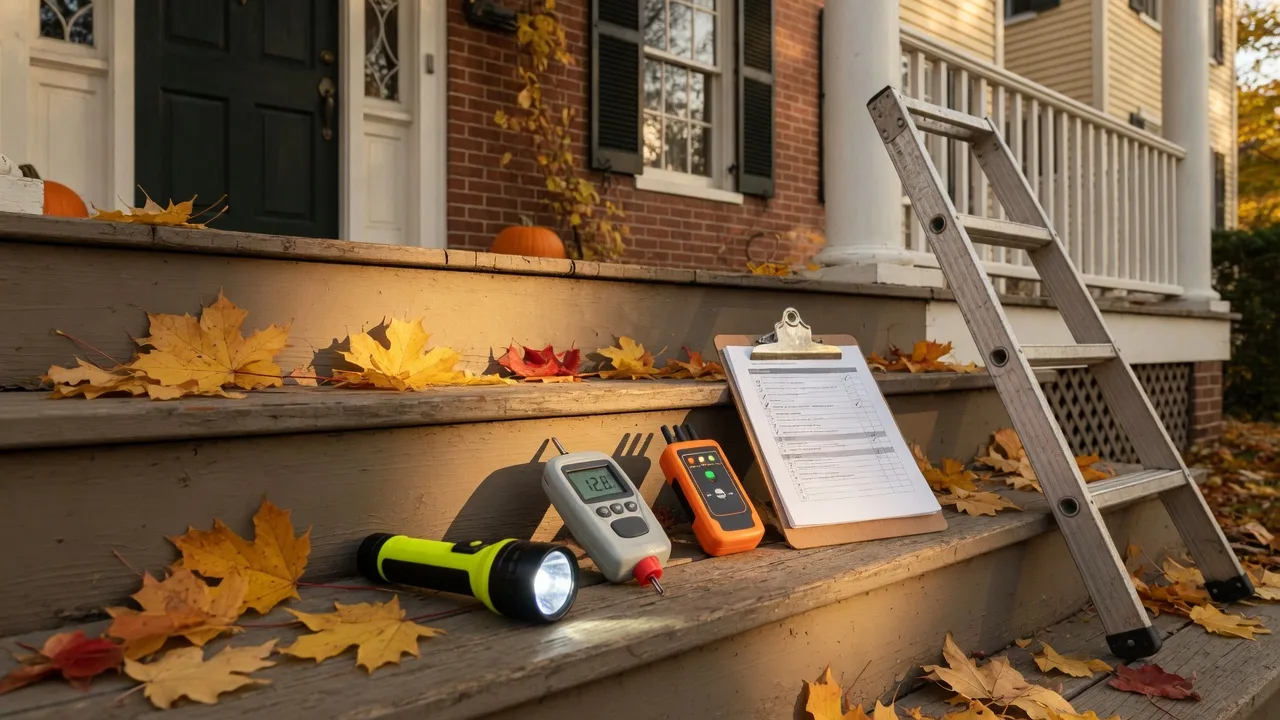
A home inspection is an independent, professional evaluation of a property's condition that buyers order before closing, and it matters more in Moorestown than in most towns because the local housing stock spans 250 years. On any given block you can find a Late Victorian on the National Register Historic District, a mid-century colonial from the 1950s, and a brand-new townhome near the Moorestown Mall. Each one brings a different set of things to look at before you commit.
This guide walks through what inspectors actually check, the issues that show up most in the Town of Quality, which add-on tests are worth paying for in Burlington County, and how to use the results to negotiate with confidence. It is the same advice I give every buyer I work with in Moorestown, whether the target is a $350,000 townhome or a $1.5 million estate.
The short version: never skip the home inspection, and do not let an appraisal fool you. An appraisal protects the lender. An inspection protects you.
Is a home inspection required when buying a home in New Jersey?
New Jersey does not require a home inspection for most resale purchases, and the law does not require one before you sign a contract. FHA and VA loans require an appraisal, which is a lender's estimate of value, not a condition report, and conventional loans typically require no inspection at all. You are almost always choosing to inspect, and you should.
What the state does now require is seller honesty on paper. Since August 2024, the Real Estate Consumer Protection Enhancement Act has made New Jersey's Property Condition Disclosure Statement mandatory: every seller of residential real estate must complete the state's disclosure form, which runs 108 questions, before the buyer becomes contractually obligated. That is a real change from the old days when a seller could waive the form entirely.
Here is the catch. The disclosure covers what the seller knows or should know, through the seller's eyes. An inspector sees the house with fresh eyes and a flashlight, and catches what a seller never noticed or chose not to mention. New Jersey has historically been a buyer-beware state, and while courts no longer shield sellers who hide known defects, the practical burden of looking still falls on you. The inspection is your best defense, and it is cheap compared with the surprises it prevents.
What does a home inspector check in a Moorestown home?
A standard inspection is a visual, non-invasive review of the home's major systems and components. Most inspectors spend two to three hours on a typical single-family house and cover the roof and gutters, exterior siding and trim, foundation and basement or crawlspace, framing where it is visible, the electrical panel and outlets, plumbing supply and drains, the water heater, heating and cooling equipment, insulation and ventilation, and the general condition of walls, ceilings, floors, windows and doors. Grading and drainage around the foundation get attention too, because water is a house's slow worst enemy.
Inspectors organize their findings into three buckets: routine maintenance items, material defects, and safety hazards. A worn door hinge is a maintenance item. A cracked heat exchanger is a safety hazard and a hard negotiation point. Knowing which bucket a finding falls into keeps the repair conversation sane.
In Moorestown, the same checklist applies to every era of home, but the emphasis shifts. A century-old house in the Historic District, roughly bounded by Maple Avenue, Chester Avenue, Main Street and Mill Street, gets extra scrutiny on plumbing drains, wiring, and the heating plant, because those systems were never built to last this long. A 1960s split-level off Stanwick Glen has a different set of risks, mostly around aging mechanicals and roofing. A new build comes with its own nuances, including builder warranties and punch-list items. The best inspectors in this market know all three.
What issues show up most in Moorestown homes?
Having walked through hundreds of Moorestown homes over two decades, I can tell you which findings repeat themselves. None of them are dealbreakers by themselves. All of them are budget items you want to know about before you own them.
Aging roofs. Moorestown's older stock has roofs in every stage of life. Loose asphalt shingles, worn flashing around chimneys, and moss on north-facing slopes are common on homes 15 to 25 years old. Historic homes may carry slate or clay tile, which needs a roofer who knows those materials, not a generalist.
Outdated electrical. Pre-1950 homes can still have knob-and-tube wiring in places, and many mid-century homes run on 60-amp or 100-amp panels that modern loads strain. Lights flickering during the inspection and two-prong outlets are the visible clues. Budget to upgrade a panel if the report calls for it.
Old drains and water heaters. Cast iron drain lines corrode from the inside out, and a camera scope often tells a story the visual inspection cannot. Water heaters in this region typically last 10 to 15 years, so a unit that is a teenager should be on your radar even if it still works today.
Radon. Burlington County sits in EPA Map of Radon Zones Zone 2 and NJDEP Tier 2, both meaning moderate potential, and the county's average indoor reading is about 1.8 pCi/L against a national average of 1.3. The EPA action level is 4.0 pCi/L, and homes above it should be mitigated, usually with a simple venting system. The Burlington County Health Department even distributes free radon test kits, which tells you how seriously the county takes it. A short-term radon test during your inspection window is a few days of patience and a couple hundred dollars at most.
Underground heating oil tanks. New Jersey has one of the highest concentrations of residential buried oil tanks in the country, most installed between the 1930s and 1970s. A leaking tank can contaminate soil and groundwater, trigger NJDEP cleanup oversight, and the responsibility can attach to the owner at the time the leak is found, not the owner who installed it. That is why a buried-tank sweep is standard due diligence on any Moorestown pre-1980 home, especially ones that once ran on oil heat.
Wood-destroying insects. New Jersey is squarely in the termite belt, and lenders routinely ask for a wood-destroying insect clearance on resales. A separate WDO inspection is a quick add-on and gives you a written certification that matters at close.
Lead paint. Any home built before 1978 may have lead-based paint, and Moorestown has thousands of them. Intact lead paint is manageable, chipping lead paint around windows and doors is a real concern for families with young children, and sellers are required by federal law to disclose what they know. It is a factor to plan around, not automatically a reason to walk.
Should I get separate radon, oil tank, and termite inspections?
Yes, because the standard inspection does not include them. A general home inspection covers what an inspector can see. Radon, buried oil tanks, termites, and sewer lines are largely invisible without dedicated tests, and each one is priced as an add-on.
For most Moorestown purchases I recommend the radon test plus a WDO clearance as the baseline. For any home built before 1980, add the buried oil tank sweep, and for any house with mature trees or older drains, add the sewer camera scope. If a property sits on a private well or septic system, which exists on the fringes of the township, those need their own water quality and septic tests, and a home near Strawbridge Lake or the Rancocas Creek corridor should include a flood determination from the start. Our flood zone guide explains how to check a property's designation before you fall in love with it.
Think of the inspection report as the base plan and the add-ons as the specialist coverages. Together they tell you what the first five years of ownership will really cost.
How much does a home inspection cost in Moorestown?
For a typical single-family Moorestown home, buyers generally pay somewhere in the $300 to $500 range for the standard inspection, with larger, older, or multi-level homes at the top of that range. Add-ons stack on top: a radon test typically runs $150 to $200, a WDO clearance about the same, a buried tank sweep a couple hundred more, and a sewer scope often $300 to $400 depending on the plumber.
So a thorough due-diligence package on an older Moorestown home usually lands between $700 and $1,200, and on a newer townhome closer to $500. Set against the median sale price in this town, which our home price analysis tracks between roughly $640,000 and $800,000 depending on the source, the inspection package is a rounding error with an outsized payoff. The most expensive inspection you can buy is still cheaper than the cheapest surprise.
Prices vary by inspector and home, so ask for a written quote up front and confirm exactly which add-ons it includes. A detailed, thorough inspector is worth the difference between entry-level and premium pricing.
What happens after the inspection? Negotiating repairs in Moorestown
Your purchase contract's inspection contingency gives you a defined window, usually a week to ten days under the standard New Jersey contract, to review the report and decide how to respond. You have three main options: accept the house as is, request repairs or a credit, or walk away and have your deposit returned. A renegotiated price is common too, especially when a seller would rather adjust price than fix an aging roof or panel.
The requests that get traction are the ones tied to safety, active leaks, code violations, and major systems near end of life. A cracked heat exchanger, active roof leak, or buried oil tank is a legitimate negotiation, and good sellers expect it. Requests for cosmetic wear, or for defects that were visible to anyone touring the house, are the ones that stall deals. Rate every finding against that standard and your request list stays credible.
Moorestown is a seller-favorable market, and a seller with multiple offers has less reason to fix everything. Your agent's job is to know which findings the seller will move on and which are better as a credit or an as-is acceptance at the right price. If you are buying your first home here, our first-time buyer guide covers the whole process end to end, and buyers of the town's older stock will want our honest guide to historic homes.
Once you close, do not file the report away. Use it as your first year's maintenance plan: the items flagged as routine are exactly the ones on the home maintenance checklist, and knocking them out early protects the largest investment you will ever make.
Frequently Asked Questions
Is a home inspection required to buy a house in Moorestown, NJ?
No. New Jersey does not require a home inspection for most resale purchases, and appraisals required by FHA or VA loans are valuations for the lender, not condition reports. Inspections are voluntary but strongly recommended, because they are your only independent look at the home's true condition before you own it.
What must sellers disclose when selling a home in New Jersey?
Since August 2024, New Jersey sellers must complete the state's Property Condition Disclosure Statement, a 108-question form covering the property's condition and known defects, before the buyer becomes contractually obligated. The disclosure covers what the seller knows; it does not replace an inspection by a professional with fresh eyes.
How much does a home inspection cost in Moorestown?
A standard inspection of a typical single-family home usually runs $300 to $500, with larger, older, or multi-level homes at the higher end. Add-on tests such as radon, termite, buried oil tank sweep, and sewer scope typically add a few hundred dollars each, putting a thorough package on an older Moorestown home between $700 and $1,200.
Is radon a concern in Moorestown and Burlington County?
Yes, enough to test. Burlington County is rated EPA Zone 2 and NJDEP Tier 2, both meaning moderate radon potential, with an average indoor reading around 1.8 pCi/L versus the 1.3 national average. The EPA action level is 4.0 pCi/L, and homes above it should be mitigated. The Burlington County Health Department offers free radon test kits.
Should I check for underground oil tanks when buying a Moorestown home?
On any home built before about 1980, yes. New Jersey has one of the highest concentrations of residential buried oil tanks in the country, most installed between the 1930s and 1970s. A leaking tank can contaminate soil and groundwater, bring NJDEP oversight, and the cleanup responsibility can fall to the owner at the time the leak is discovered. A buried-tank sweep is standard due diligence here.
What should I do if the home inspection finds problems?
Within your inspection contingency window, you can accept the home as is, ask for repairs or a price credit, or walk away with your deposit returned. Prioritize safety hazards, active leaks, code violations, and major systems near end of life; leave cosmetic items alone. A local agent who knows Moorestown's market dynamics can tell you which requests a seller will accept.