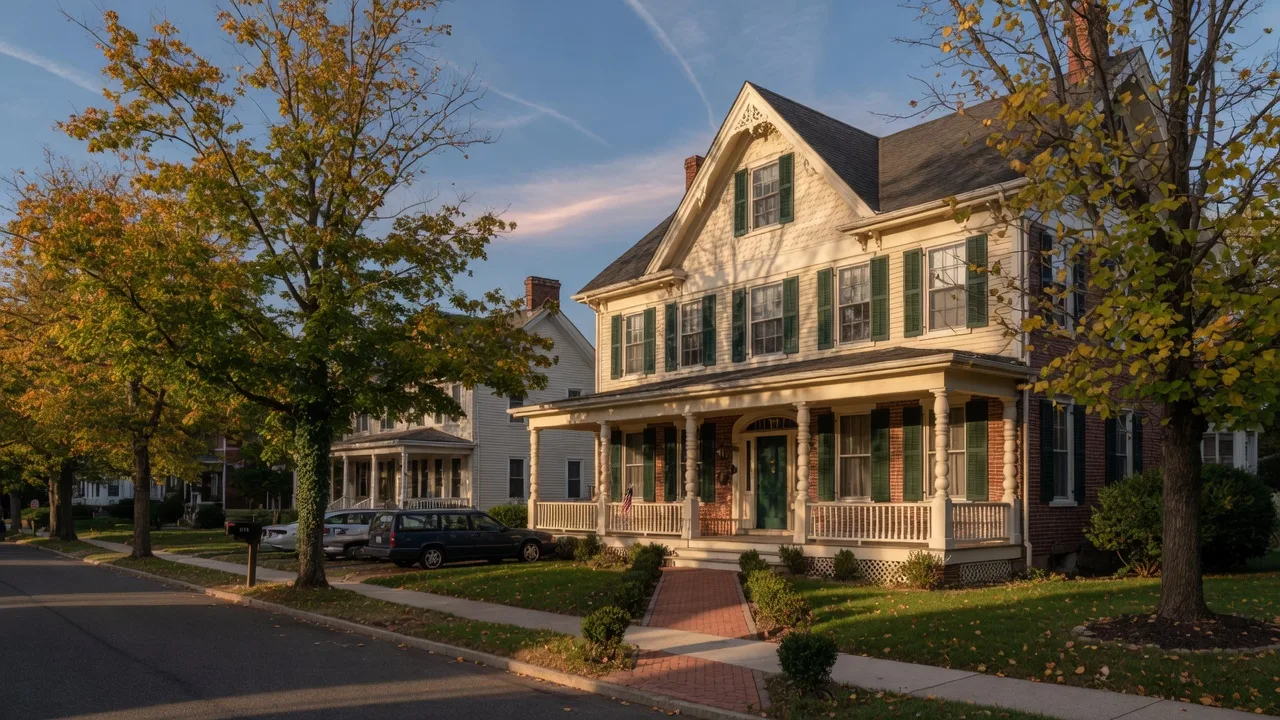
Historic homes are some of Moorestown's most sought-after listings, and for good reason: the Town of Quality's walkable core is full of Victorians, early-American colonials, and 20th-century revival houses that new construction simply cannot match. But buying a home that is a century old is different from buying new, and in Moorestown it now comes with a preservation ordinance that took effect in 2025. This guide explains where Moorestown's historic homes are, what the new rules mean for owners, what inspections and upkeep really involve, and how to decide whether an old house is the right call for you.
The short version: a historic Moorestown home can be a wonderful, character-filled place to live and a durable long-term investment, but it rewards buyers who inspect carefully, budget honestly, and understand the local rules before they make an offer. Walk in with your eyes open and an old house here can be the best address on your street.
Where Are Moorestown's Historic Homes, and How Old Are They?
Moorestown's roots run deep. English Quakers settled the area in the 1680s, and the town was named for Thomas Moore, who purchased land here in 1732. That heritage is visible everywhere: the meetinghouse tradition on Main Street, the old civic buildings, and a housing stock that spans 250 years of American residential architecture. Our history of Moorestown walks through the full story.
The most concentrated collection of old homes sits in the Moorestown Historic District, roughly 47 acres listed on the National Register of Historic Places in 1990. The district is bounded by Maple Avenue, Chester Avenue, Main Street from Zelley Avenue to Locust Street, and Mill Street, and it includes homes in the Mid-19th Century Revival, Late 19th and Early 20th Century Revival, and Late Victorian styles. The Old Town Hall at 40 East Main Street, built around 1812, anchors the district and is listed on both the state and national registers.
But historic homes are not confined to the district. Classic colonials and Victorians line Chester Avenue and Third Street just off the downtown core, older pockets sit along the streets approaching Main, and mid-century homes from the 1930s through the 1960s are scattered across neighborhoods like Stanwick Glen and the Lenola section. If what you love is a home with history and an established street, Moorestown has more of it than almost any town its size in Burlington County. The neighborhood-by-neighborhood breakdown is in our best neighborhoods guide.
What Are the New Historic Preservation Rules in Moorestown?
This is the detail most buyers miss, and it matters. In April 2025, Moorestown's Township Council adopted Ordinance No. 06-2025, adding Chapter 96 on historic preservation to the township code. It created a local historic district covering primarily commercial properties along central Main Street and part of Chester Avenue, and it formally recognized seven individual historic sites. The ordinance also established the Historic Preservation Commission, which reviews proposed work in the district.
The practical effect: in the local historic district, a Certificate of Appropriateness is required before any demolition, exterior alteration, or new construction can begin. The commission's job is to make sure changes are compatible with the character of the district and the township's Master Plan. The National Register listing alone, which is honorary, did not stop demolition; the 2025 local ordinance is what adds real protection on the ground.
The rules are more reasonable than many buyers fear. The commission does not regulate interiors, and it does not dictate paint colors. A kitchen remodel, a bathroom update, or fresh interior paint does not need a Certificate of Appropriateness, though ordinary township building permits still apply to structural and mechanical work. It is exterior work, window replacements, roofing changes, siding, porches, additions, and demolition that trigger the review. More detail on how the permit process works in the Town of Quality is in our Moorestown FAQ.
What Can a Home Inspection Really Tell You About an Older Moorestown Home?
A standard home inspection is the starting point, but an older home deserves a deeper look. The classic inspection issues in pre-war and mid-century houses are structural, mechanical, and environmental, and they follow predictable patterns. Knowing where to look means fewer surprises after closing.
Structure and envelope: have the foundation checked, stone or concrete, for settlement, cracks, and moisture. Verify the age and condition of the roof, the state of the masonry and pointing on brick or stone houses, and whether any prior additions were built with proper footings. Ask about drainage: old homes often sit with finished grade sloping toward the foundation, and Burlington County's clay soils hold water.
Systems: pre-1950 houses may still have knob-and-tube wiring, a fuse panel, or undersized service, and plumbing could be galvanized supply lines or aging cast-iron drains. None of these are deal-breakers, but each is a real project with a real cost, and they should be priced into your offer. If the home is on a well or septic system, budget for a water quality test and a septic inspection in addition to the general inspection.
Hidden hazards: lead paint is common in homes built before 1978, and asbestos can appear in flooring, insulation, and pipe wrap in mid-century houses. Both are manageable with the right contractors, but remediation is not free. Check the town's maps against Moorestown's flood zone guide, too, since older homes near creeks and low spots deserve a careful look at flood history before you commit.
The smart move is to follow the general inspection with focused inspections by licensed pros: a structural engineer if anything is flagged, a licensed electrician for the panel and wiring, a plumber for supply and drain lines, and a chimney sweep if the home has fireplaces. It costs a few hundred dollars and routinely turns up the items that renegotiation is built on. For the maintenance rhythm that keeps an older house healthy after you move in, our home maintenance guide is a good companion read.
How Much Does It Cost to Keep Up a Historic Moorestown Home?
Honest budgeting is where historic-home enthusiasm meets reality. A commonly cited guideline among financial planners and real estate writers is to set aside roughly 1% to 3% of a home's value each year for maintenance and repairs. Older homes, with older systems and more intricate details, tend to land at the higher end of that range, and in the first few years after purchase, many owners of older houses spend more than average as deferred maintenance catches up.
The costs are specific to the age of the house. Original windows may need restoration or efficient storm units rather than cheap replacements. Brick and stone need periodic repointing. Radiant or steam heat, plaster walls, and detailed millwork cost more to repair than their modern equivalents. None of this is prohibitive, but it is a lifestyle: an old house rewards owners who treat maintenance as a year-round project rather than a spring cleanup.
Two local money notes. First, energy: older Moorestown homes are often draftier than new construction, and upgrades like storm windows, attic insulation, and modern HVAC can cut the gap dramatically without touching the home's character. Our energy efficiency guide covers the upgrades that pay off locally. Second, taxes: Moorestown property taxes are a real part of the monthly math for every homeowner, and major additions or finished space can change your assessment. The property tax guide explains how assessments work in the Town of Quality.
Can You Renovate or Add On to a Historic Moorestown Home?
Yes, and buyers do it all the time. The distinction to understand: if the home sits in the local historic district, exterior work is reviewed by the Historic Preservation Commission through the Certificate of Appropriateness process, while interior work is not reviewed by the commission at all, though township permits still apply to the work itself.
In practice that means kitchens, baths, interior reconfigurations, finished basements, and attic conversions proceed like any Moorestown renovation. Window replacements, new siding, porch changes, roofing material changes, and any addition or demolition in the district go before the commission, which looks for compatibility with the district's character. Period-compatible options exist for almost everything: windows that look original, paint-scheme guidance, and hardware and lighting in traditional finishes. A modern deadbolt, a new panel, and a heat pump can all be invisible to the eye.
Two practical tips. Before you make an offer on a house in the historic core, ask the seller about any recent exterior work and whether it was permitted and approved; unapproved exterior changes can become your problem after closing. And hire from the township's experienced trades: a contractor who knows Moorestown's older homes and its permit culture is worth more than one who learns on your house. Our contractor guide points you to vetted local professionals.
Are Historic Homes in Moorestown a Good Investment?
For the right buyer, yes, and the fundamentals are structural. The inventory of true historic homes in Moorestown is finite: nobody is building more 1910 colonials. Well-maintained character homes in walkable locations near Main Street have durable appeal, and they tend to attract buyers who value exactly the things new construction cannot offer: mature trees, established streets, generous rooms, and a sense of place.
The caveats are equally real. An old house is not a flip: its value over time tracks how well it is maintained, and the market data shows Moorestown's overall price trends apply to historic homes like every other segment. Location within the town matters, condition matters, and the quality of updates matters more than cosmetic styling. For the current numbers, our home prices analysis and market forecast lay out where Moorestown values sit and where they are headed.
Think of a historic home as a long-term hold rather than a trade: buy the right house, maintain it faithfully, and it serves your family for decades while quietly compounding. That is the classic Moorestown outcome, and it is one of the reasons the Town of Quality holds its resale strength year after year.
Is a Historic Home the Right Choice for You?
A historic Moorestown home fits beautifully if you love craftsmanship and character, enjoy (or can hire) ongoing maintenance, value living within walking distance of downtown, and plan to stay for years rather than seasons. The older homes here are loved by their owners in a way new construction rarely inspires.
Think twice if you want a move-in-ready house with minimal upkeep, no surprises, and the latest energy performance. There is nothing wrong with that preference, and Moorestown serves it well too, with newer neighborhoods, townhomes, and new construction around Lenola Road and the mall redevelopment. The broader picture of your options, including historic, older, and new homes, is in the living in Moorestown guide.
If you decide an old house is your path, the winning formula is discipline: verify the district status early in your search, inspect with specialists, budget 1% to 3% of value for upkeep, and treat the preservation rules as a feature, not a bug, since they protect the very character you are buying. Walk the blocks around Main Street and Chester Avenue on a fall afternoon, and you will understand why Moorestown's historic homes rarely stay on the market for long.
Frequently Asked Questions
How old are the historic homes in Moorestown?
Moorestown's housing stock spans 250 years, from homes around the National Register Historic District, listed in 1990 and roughly bounded by Maple Avenue, Chester Avenue, Main Street, and Mill Street, to mid-century neighborhoods built through the 1960s. The district's prominent styles include Late Victorian and Mid-19th Century Revival homes.
Do I need special permission to renovate a historic home in Moorestown?
In the local historic district created by the 2025 preservation ordinance, exterior alterations, additions, and demolition require a Certificate of Appropriateness from the Historic Preservation Commission before work begins. Interior renovations do not need this certificate, though normal township building permits still apply to the work.
Does the Moorestown historic district prevent demolition?
The National Register listing itself is honorary and does not stop demolition, but Moorestown's 2025 local ordinance adds real protection. In the local historic district, demolition requires a Certificate of Appropriateness, and the Historic Preservation Commission reviews whether the change is compatible with the district's character.
Are historic Moorestown homes more expensive to maintain?
Generally yes, because systems, windows, masonry, and millwork are older and cost more to repair or replace. A commonly cited guideline is to set aside 1% to 3% of the home's value each year for maintenance, with older homes usually landing at the higher end, especially in the first few years after purchase.
What inspections matter most on an older Moorestown home?
Start with a general inspection, then add specialists: a foundation and structural review, a licensed electrician for knob-and-tube wiring or fuse panels, a plumber for galvanized supply lines and cast-iron drains, and a chimney sweep if there are fireplaces. Test well water and inspect septic systems on properties that have them.
Can I replace the windows in a historic Moorestown home?
In the local historic district, window replacement counts as exterior alteration, so it needs a Certificate of Appropriateness. Period-compatible windows and efficient storm units are usually the winning answer: they keep original sightlines while improving comfort, and the commission is looking for compatibility with the district's character.
Are historic homes in Moorestown a good investment?
For the right buyer, yes. Historic inventory is finite, and character homes in walkable locations near Main Street have durable demand. Treat the house as a long-term hold, maintain it faithfully, and its value follows Moorestown's overall market, which the home prices analysis and market forecast pages track in detail.