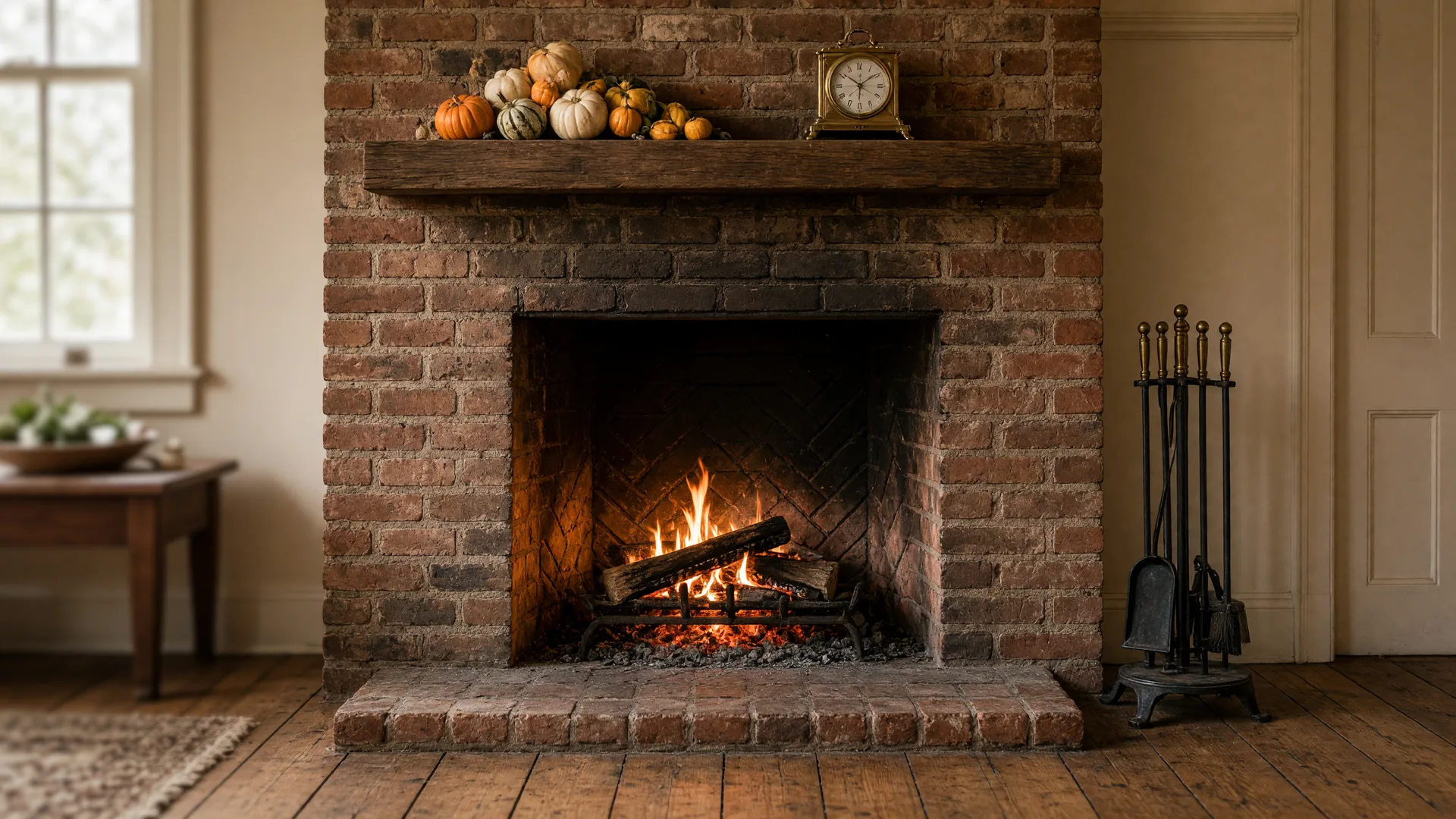
When the first cold night arrives in Moorestown, there is nothing cozier than lighting the fireplace in a colonial on Chester Avenue, a Victorian near Main Street, or a family room in a newer neighborhood off Hartford Road. But before you strike the match, that chimney deserves the same annual checkup you give your furnace. A chimney that has not been inspected in years can hide creosote buildup, cracked flue tiles, or a bird's nest, and those hidden problems are exactly what turn a cozy fire into a chimney fire or a carbon monoxide scare.
This guide walks Moorestown homeowners through why annual chimney inspection matters, how often to sweep the flue and what it costs in New Jersey, the warning signs of creosote buildup, how to recognize a chimney fire, New Jersey's carbon monoxide rules, and the safe-burning habits that protect a Town of Quality home all winter.
Why Do Moorestown Homeowners Need a Chimney Inspection Every Year?
The National Fire Protection Association's NFPA 211 standard recommends that chimneys, fireplaces, and vents be inspected at least once a year, and for good reason. The leading cause of chimney fires is creosote, the flammable byproduct of burning wood that condenses onto the inner walls of the flue as a fire burns. The more fires you light and the cooler the flue gases are, the faster creosote builds up. A layer the thickness of a pencil lead or less is enough to fuel a chimney fire that can exceed 2,000 degrees.
Summer brings its own blockages. Between April and October, Moorestown's mature oaks and maples drop leaves and twigs down uncapped chimneys, and birds, squirrels, and raccoons have all season to build nests inside a flue. A blocked chimney can't vent, which pushes smoke back into the house and sends carbon monoxide toward your living space instead of up and out. A simple chimney cap with a screen is one of the cheapest protections a chimney can get.
Even light use needs the check. If you only light the fireplace a few times a year, the flue still needs the annual look. Moisture, freeze-thaw cycles, and age crack clay tile liners and erode mortar regardless of how many fires you build, and an aluminum or stainless liner installed years ago can exceed its service life. An inspection is a licensed professional looking at the flue, firebox, damper, smoke shelf, and visible exterior structure, and telling you exactly what condition it is in. When a deeper look is needed, such as after a chimney fire or before you buy a home, a Level 2 inspection adds a video scan of the full flue and the spaces around it.
For the full seasonal rhythm that keeps a home healthy through a New Jersey winter, our Moorestown home maintenance guide is a good companion to this one.
How Often Should You Sweep Your Chimney, and What Does It Cost in New Jersey?
Under NFPA 211, sweeping is driven by how much buildup is actually in the flue. The rule of thumb chimney professionals use: have the chimney swept whenever soot or creosote reaches about one-eighth of an inch (3 millimeters) of buildup on the flue walls. Glazed, rock-hard creosote should be removed as soon as it is found because it is the most dangerous form and it restricts airflow. The Chimney Safety Institute of America goes one step further and recommends a professional cleaning every year, regardless of how much you burn.
Frequency depends on your habits. A household that burns a few fires a season typically needs one sweep a year. A family that heats with the fireplace most winter evenings, or that runs a wood stove daily, may need a sweep twice a season or even quarterly. If you have any doubt, book the sweep and let the technician measure the buildup inside the flue.
What it costs. In New Jersey and the wider Northeast, a professional sweep that includes a Level 1 visual inspection typically runs $150 to $400, with most homeowners paying around $250. A basic sweep with inspection at many New Jersey companies is $150 to $250, and a Level 2 interior video inspection adds roughly $250 to $600 depending on the setup. Those prices are a small fraction of what a chimney fire or water-damaged flue costs, which is why this is one of the best-value maintenance jobs on a Moorestown home.
Book before the first cold snap. November is peak season for Burlington County chimney pros, and the week after the first real freeze every wood-burning household in South Jersey suddenly wants an appointment. Scheduling your sweep in early November, or even in October, gets you a convenient slot and a thorough tech who is not running between emergency calls.
What Are the Warning Signs of Creosote Buildup?
You do not need a camera to suspect creosote is building up in your chimney. Homeowners who know what to look for catch most problems long before a professional visit. The classic warning signs include:
A smoky smell that lingers. If you smell campfire smoke around the fireplace when it has not been lit in days, especially on damp or humid days, that is creosote off-gassing in the flue. Black, shiny, tarry deposits. Creosote starts as soft, powdery soot (Stage 1), then turns crusty and flaky (Stage 2), and finally becomes a hard, glazed tar that looks almost like a black mirror or varnish (Stage 3). Glazed creosote is the highest fire risk and requires professional removal. Black flakes in the firebox. Flakes on the smoke shelf or the floor of the firebox mean buildup is peeling off the flue walls. A weak draft. Fires that are hard to light, burn sluggishly, or push smoke into the room point to a restricted flue. Difficulty opening the damper can also signal excessive buildup.
If you see any of these signs, stop burning and schedule a sweep and inspection before the next fire. Burning through a partially clogged flue only bakes the creosote into a harder, more dangerous form.
How Do You Know If You Have Had a Chimney Fire?
A chimney fire can be dramatic or almost silent. Homeowners who are burning during one may hear a loud roaring or rumbling sound, see dense smoke pouring from the top of the chimney, hear popping and cracking like a bonfire gone wrong, watch flames or sparks shoot from the chimney crown, and smell an intense burning or hot odor. On the roof, glowing embers may be visible around the cap.
Some chimney fires are slow and quiet. They burn hot enough to damage the flue but never announce themselves, and the only clue is crumbling flue tiles, buckled liner, or soot puffs found at the next inspection. That is why the annual inspection matters even if everything seems fine.
If you suspect a chimney fire: Get everyone out of the house and call 911 if you see flames, heavy smoke, or signs it is spreading. Do not go back inside. If the fire appears to have been contained, stop using the fireplace immediately and schedule a Level 2 chimney inspection before you light it again. A chimney that has been through a fire often needs flue relining or masonry repair, and using it before that work is done risks letting fire or carbon monoxide into the structure of the home.
What Are the Rules for Burning Wood Safely?
How you burn matters as much as when you sweep. Green, wet, or treated wood produces far more smoke, more creosote, and less heat, which is a triple loss for Moorestown homeowners with fireplaces.
Burn seasoned hardwood only. Split hardwood that has dried for at least six to twelve months, ideally at or below 20 percent moisture, burns hot and clean. Buy from a reputable South Jersey firewood supplier and store it off the ground under cover. Never burn green wood, painted or pressure-treated lumber, plywood, particle board, wrapping paper, cardboard, or household trash; they release toxic fumes and add dangerous creosote to the flue.
Light fires the safe way. Use kindling and newspaper or a commercial fire starter, never liquid accelerants, which can flash up the flue. Keep the damper fully open while the fire burns, use a sturdy grate that holds wood up off the hearth, and keep a metal fire screen in front of the opening while the fire is going.
Never leave a fire unattended. Keep furniture, rugs, curtains, and holiday decorations at least three feet away from the hearth, and make sure the fire is fully out, with embers stirred and ashes cool, before you go to bed or leave the house. Dispose of ashes in a metal container with a lid, stored well away from the house, because embers can stay hot for days.
Test your alarms. Working smoke and carbon monoxide detectors are the backstop for every fireplace habit. If it has been a while since you tested yours, our Moorestown home security checklist covers detectors, extinguishers, and the routines that protect a home all winter.
What Do Moorestown Homeowners Need to Know About Carbon Monoxide?
Carbon monoxide is colorless, odorless, and produced by any fuel-burning appliance, including a fireplace, wood stove, furnace, boiler, water heater, or gas range. New Jersey's fire code requires CO alarms in essentially every home that contains a fuel-burning appliance or an attached garage, and it requires those alarms to be installed in the immediate vicinity of the sleeping areas, close enough that they will wake a sleeping household.
What this means for you. If your Moorestown home has a fireplace or wood stove, you are required to have CO alarms, and they belong near your bedrooms rather than only on the first floor. Alarms may be battery-operated, plug-in, or hardwired, and they should carry a UL 2034 listing. Test them monthly, replace batteries on a fixed schedule such as the fall time change, and replace the alarms themselves every five to seven years or per the manufacturer's date.
Buying or selling changes the rules too. Before a one- or two-family home in New Jersey is sold or leased, the owner must obtain a smoke and carbon monoxide alarm certificate of compliance. That certificate is a real part of a Moorestown closing, and a home inspection or local fire official visit will surface missing or expired detectors long before the closing table. If you are preparing a home to sell, installing fresh, certified alarms is a small, high-impact item. For more on the safety landscape and local resources, see the Moorestown emergency services guide.
If an alarm sounds, do not investigate at length. Get everyone outside, call 911 from fresh air, and do not re-enter until emergency responders clear the home. Carbon monoxide poisoning symptoms, headache, dizziness, nausea, and confusion, are easy to mistake for the flu, which is why the alarms matter.
Do Gas Fireplaces and Wood Stoves Need Special Care?
Gas logs and gas fireplaces are not a no-maintenance alternative. A qualified technician should inspect a gas fireplace every year, checking the burner, pilot assembly, gas connections, and venting. Even a built-in gas unit that looks perfect can leak carbon monoxide or soot if the burner is dirty or the vent is blocked, and a seasonal tune-up is a few hundred dollars well spent. Never install, convert, or alter a gas fireplace without the proper permits from Moorestown; this is work that belongs with a licensed professional.
Wood stoves have their own checklist. Keep the stove at least the manufacturer's listed clearance from combustible walls and furniture, confirm the floor protection under and in front of the stove is intact, and have the stovepipe, joints, and chimney cap checked annually when the chimney is swept. Door gaskets that have gone brittle should be replaced so the stove burns at the right temperature, and the flue should stay clear of creosote exactly as with a fireplace.
If you are sizing up a home's appliances before a move or a purchase, the Moorestown FAQ answers common questions about what living here really involves, from heating costs to taxes.
What Moorestown-Specific Chimney Issues Should You Watch For?
Moorestown's housing stock spans three centuries, and the chimney questions are different depending on which century your house came from.
Historic District homes. The beautiful 18th and 19th century homes around Main Street, Chester Avenue, and Maple Avenue often retain original fireplaces, and some flues were never designed with the modern clay tile liners we expect today. If you own an older home, a Level 2 camera inspection is the honest way to learn what is actually in the flue. Relining an aging flue with a stainless steel liner is a common, worthwhile project that makes the fireplace safe to use, and if any exterior chimney work is involved, check with the Moorestown Historic Preservation Commission first, since approved materials and methods matter in the historic district. The Living in Moorestown guide walks through the character of these neighborhoods in more depth.
Post-war and newer homes. Homes built in the 1950s through today generally have properly lined flues, but they are just as vulnerable to animals, weather, and an untested damper. The same annual inspection applies, and a chimney cap is still the best prevention against Moorestown's resident wildlife.
Where to turn locally. For the annual sweep and inspection, Moorestown homeowners have local and nearby options: Dynamic Chimney Cleaning and Sweep serves the Moorestown area out of New Albany Road, and companies such as Eagle Chimney Services and A1 Chimney in Cherry Hill are names South Jersey homeowners commonly use. For hardware and small supplies, Moorestown True Value Hardware on Mill Street is the convenient local stop, and ask any sweep what they charge for a Level 1 versus Level 2 inspection before you book. For connecting with vetted local tradespeople for related work like roof flashing or masonry, the home maintenance guide and the home improvement guide point the way.
Chimney and Fireplace FAQ for Moorestown Homeowners
How often should a chimney be inspected and cleaned?
NFPA 211 recommends an annual inspection of chimneys, fireplaces, and vents, and the Chimney Safety Institute of America recommends a professional cleaning every year. If you burn wood most winter evenings, consider a second sweep mid-season. At minimum, sweep whenever soot or creosote reaches about one-eighth of an inch on the flue walls.
How much does a chimney sweep cost in Moorestown, NJ?
In New Jersey and the wider Northeast, a professional sweep with a Level 1 visual inspection typically runs $150 to $400, with most homeowners paying around $250. A Level 2 inspection with a video scan of the flue adds roughly $250 to $600. Ask for a Level 1 versus Level 2 price up front when you book.
What are the warning signs of creosote buildup?
Look for a smoky campfire smell when the fireplace is cold, black shiny or tarry deposits in the firebox and damper, black flakes on the smoke shelf, a weak draft that pushes smoke into the room, and fires that are hard to light. Glazed, rock-hard deposits are the most dangerous form and must be professionally removed.
What should I do if I think I have had a chimney fire?
Get everyone outside and call 911 if you see flames, heavy smoke, or sparks from the chimney top. If the fire appears contained, stop using the fireplace immediately and schedule a Level 2 inspection before lighting it again. Chimney fires can crack flue tiles and damage liners even when they burn quietly.
Are carbon monoxide detectors required in Moorestown homes?
Yes. New Jersey's fire code requires CO alarms in homes that contain any fuel-burning appliance, including a fireplace or wood stove, or that have an attached garage. Alarms must be installed in the immediate vicinity of sleeping areas, carry a UL 2034 listing, and be tested monthly. New Jersey also requires a smoke and CO alarm certificate of compliance when a home is sold or leased.
What kind of wood should I burn in my fireplace?
Burn only seasoned hardwood that has dried at least six to twelve months, ideally at or below 20 percent moisture. Never burn green wood, painted or pressure-treated lumber, plywood, cardboard, wrapping paper, or household trash, which release toxins and create dangerous creosote. Start fires with kindling and newspaper, never liquid accelerants.
Do gas fireplaces need an inspection too?
Yes. A qualified technician should inspect a gas fireplace every year, checking the burner, pilot, gas connections, and venting. Dirty burners or blocked vents can produce carbon monoxide even in a unit that looks fine. Never install or alter a gas fireplace without the required Moorestown permits and a licensed professional.